
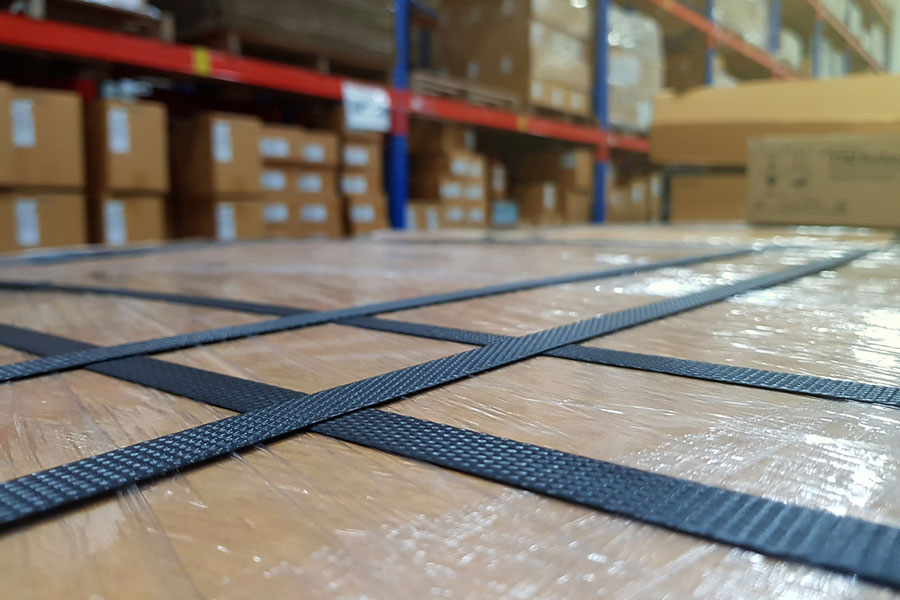
For many decades, steel strapping has been the gold standard for securing the heaviest loads, thanks to its excellent strength and durability. While steel strapping still has a role today, modern alternatives like PET strapping can often replace steel straps for some loads. In addition to being more affordable than steel strapping, PET strapping is generally easier and safer for workers to handle, making it an excellent choice for many applications. At USA Strapping, our team understands the importance of having the right tool for the job, which is why we’ve prepared this guide on switching from Steel to PET strapping. We’ll take a closer look at the roles both of these strapping materials have to play and what you should know about transitioning from steel to PET strapping.
Comparing Steel And PET Strapping
Whether you’re using strapping for shipping or storage, having the right strapping material on hand is vital for both the safety of your employees and ensuring your business operates as cost-efficiently as possible. For many businesses, steel straps have long been the go-to choice as they are generally very durable and more resistant to sharp edges than other strapping materials. While steel straps have a role to play in the modern world, they are often more expensive than other strapping materials and can be slightly more dangerous to work with.
PET strapping can replace steel straps in certain applications, and not only will you save money on strapping materials, but you’ll also reduce the risk of a worker getting injured on the job. We’ll explore some of the more common applications of PET strapping to help you understand when it is an effective alternative to more expensive steel straps.
What Roles Can PET Strapping Fill?
PET strapping has surged in popularity ever since its initial introduction. In some industries, jobs that were once dominated by steel strapping have switched to PET strapping, with 70% of roles previously filled by steel strapping now using PET. Some of the more common applications for PET strapping that have replaced steel straps include:
- Securing palletized goods
- Securing lumber
- Securing bricks, blocks, and pavers
- Securing building materials
PET straps come rated for a wide variety of load sizes and weights, often well within the safe operating range for jobs that used to require more expensive steel straps. We recommend that shippers and other logistics companies evaluate what role steel straps play in their operations and when more affordable, easier-to-work-with PET straps can replace steel. Often, this is a hybrid approach to load security, with steel straps still being used for the heaviest loads and PET straps replacing lighter-duty loads.
Applications That Usually Still Require Steel Straps
While PET straps can replace many of the jobs that once used steel straps, steel straps continue to be a necessary tool for certain applications. Steel straps are still recommended for:
- Steel coils and sheet metal
- Extremely heavy industrial machinery
- Large structural steel bundles
- Very sharp-edged products that could cut PET strapping
We recommend a hybrid approach to strapping that ensures your employees will always have the right strap available for the job. USA Strapping makes it easy for you to stock up on both PET and steel straps so that your team will always be ready, regardless of your strapping needs.
Explore the Industry’s Best PET Straps at USA Strapping!
Whether you’re looking for PET straps for a single job or need thousands for larger-scale operations, USA Strapping is here to help! To get started shopping for PET straps and strapping tools, check out our inventory today or call our team at (888) 768-0001.