
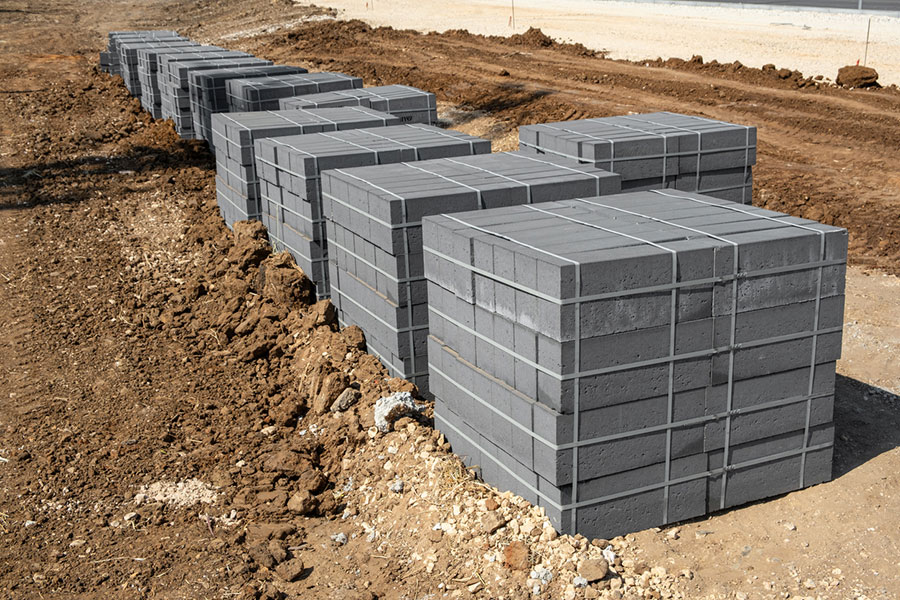
Transporting building materials like brick, stone, or other masonry loads requires tough strapping materials to ensure your products arrive safely. These heavy materials can put immense strain on straps, which, combined with their rough surfaces and ease of shifting, make steel banding the ideal choice. At USA Strapping, our team is here to bring you the tools you need to ship, secure, and store all types of loads, including masonry and construction materials. We’ll take a closer look at steel banding for building materials and what makes this specific type of strapping material so useful for masonry loads.
Why Steel Banding Remains the Industry Standard for Masonry Loads
While there are several different types of straps and bands, steel banding has long been considered the industry standard for heavy masonry loads. Steel banding excels at securing loads of:
- Brick pallets
- Concrete blocks
- Retaining wall blocks
- Concrete pavers
- Natural stone
Combined with its natural abrasion resistance, minimal stretch, and ability to handle loads over 2,000 pounds, steel banding is hard to beat for heavy masonry applications. However, choosing the correct steel banding is still crucial to ensure that your load is safely secured and within the band’s rating.
Choosing the Right Steel Banding: High Tensile Compared With Regular Duty
Generally speaking, thicker steel banding can handle heavier loads than thinner steel banding. You’ll also notice that steel banding is often labeled as either high-tensile or regular-duty. Regular-duty steel banding is typically used for palletized loads of masonry materials and local deliveries. High tensile strength steel banding, as the name implies, is a stronger type of steel banding that is excellent for extremely heavy loads, long distance shipping, and high compression banding applications. Choosing the right type of steel banding comes down to considering the total weight of your load, the distance it will travel, and cost considerations that balance safety with affordability.
Best Practices for Securing Brick, Block, and Stone Loads
With all strapping products, proper placement is crucial for both safety and performance. With masonry loads, you’ll want to use a variety of different strap placements depending on the size and weight of the load. Possible banding techniques you may need to use include:
- Horizontal banding
- Vertical banding
- Cross-pattern applications when appropriate
- Multiple strap placement for larger pallets
Once you’ve chosen the correct banding pattern for your load, you’ll need to tension your straps to the manufacturer’s recommendation. Edge protectors may be needed to protect bands from sharp edges under tension. Finally, as masonry materials tend to produce a lot of dust, you’ll want to keep contact areas as clean as possible to ensure bands maintain friction with the load.
Safety Considerations When Working With Steel Bands
Steel bands can pose a higher risk of injury to your workers than other banding materials. Workers should have access to and use personal protective equipment, including:
- Gloves
- Eye protection
- Tensioning tools
- Sealing tools
Employees should also be trained in proper banding techniques to protect themselves and ensure the load’s safety. In addition to steel banding, USA Strapping also has an excellent inventory of the strapping tools you and your team need to work with steel bands efficiently, effectively, and safely.
Find Steel Banding for Masonry and Other Construction Loads at USA Strapping
Whether you’re looking for standard duty steel banding, high tensile steel banding, or tensioning and sealing tools, USA Strapping has everything you need for large masonry loads. To get started finding the right steel strapping products for your applications, call our team today at (888) 768-0001.