
What’s the Best Way to Safely Wrap a Pallet With Stretch Film?
Securing a load of palletized goods with stretch film means applying the right amount of tension, overlapping the film, and reinforcing areas that need it. It’s a very cost-effective way to secure palletized goods if you do it properly.
Hand Wrapping vs. Machine Wrapping: Does the Technique Matter?
You can use different methods to apply stretch film, with the two most popular methods being hand wrapping and machine wrapping. Let’s take a closer look at hand wrapping versus machine wrapping to help you choose the best method for your operations.
Pros and Cons of Hand Wrapping Stretch Film
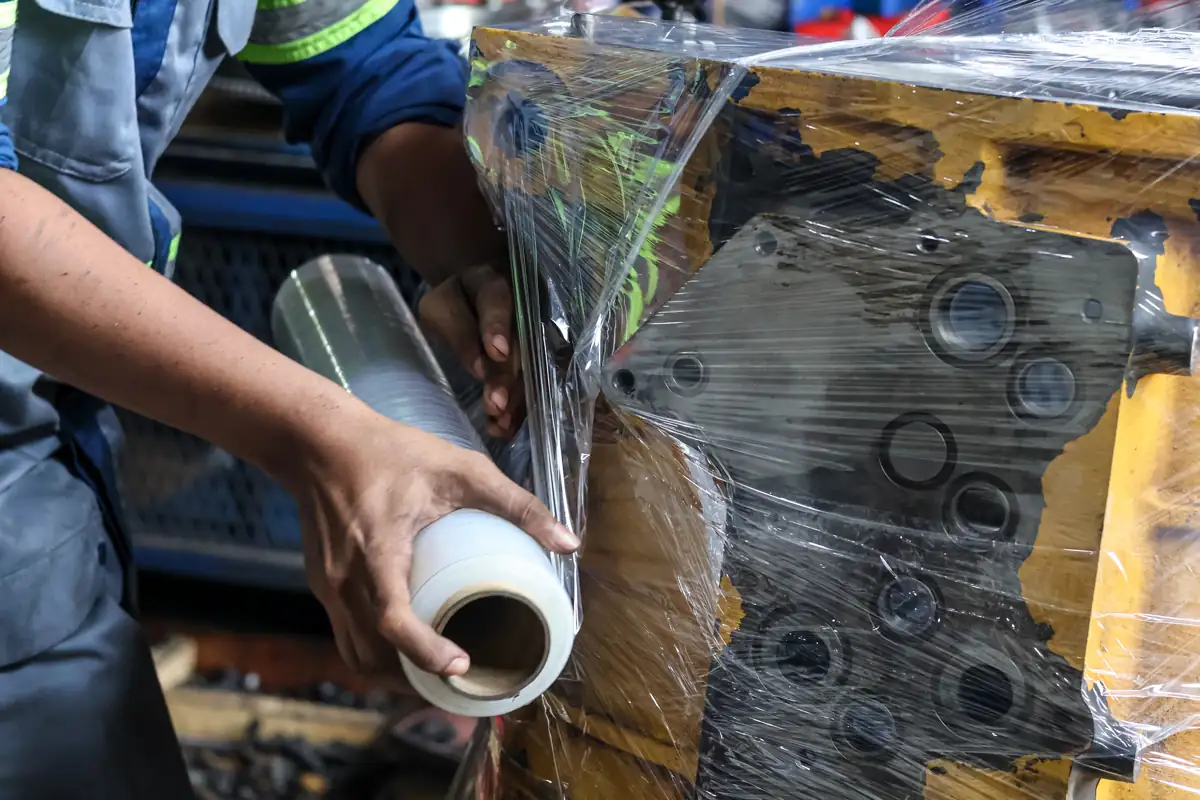
Hand-wrapping stretch film is much more common in smaller warehouse operations because it can give you the same effect as machine-wrapped stretch film pallets without the cost of automatic wrapping machines. This method is ideal for those who don’t have a large need for stretch film palletized loads on a regular basis. To properly use hand wrapping for stretch film, start by attaching the film to the bottom of the load. Then wrap the bottom of the load several times to build up layers of stretch film, and gradually work your way up the load. The hardest part of the hand-wrap method for stretch film is applying consistent tension throughout the wrap. Hand wrapping is also much slower than machine wrapping, which makes it impractical if you have a high demand for stretch film wrapping.
Pros and Cons of Machine Wrapping
Machine wrapping of stretch film is the ideal choice if you’re a larger-sized warehouse and require stretch film wrapping several times a day. Machines can dramatically cut the time it takes to wrap stretch film by hand and apply consistent tension across the palletized load. The only major downside to machine wrapping is the higher initial investment cost, although this cost is often recouped quickly through increased productivity.
How Much Overlap and Tension to Use With Stretch Film
Whether you’re going to be using the hand wrap method for stretch film or the machine wrap method, you’ll need to ensure that your finalized pallet is secure. To keep the load securely contained, use overlapping layers of stretch film and consistent tension throughout. Tension depends on the load’s size and weight, with heavier loads requiring more tension. For overlapping stretch film, use multiple layers, with a common rule of thumb being that 50% of the stretch film is overlapped.
Using Top Sheeting and Banding for Additional Protection
Top sheeting and banding are additional methods commonly used alongside stretch film for added security. Top sheeting provides an extra layer of protection against dirt and moisture that your palletized load may encounter in storage or transit. Banding, or the use of additional straps for a palletized load, is an excellent option for heavier loads that need additional reinforcement, whether that’s polyester (PET) strapping or steel banding. You can use both methods together or on their own, depending on your specific needs.
Common Mistakes Seen With Stretch Film
While stretch film is an excellent method when used correctly, it can fail if used improperly. The main mistakes that we see when stretch film fails include:
- Failing to secure the load to the pallet
- Failing to use enough stretch film
- Failing to apply consistent tension
- Failure to use banding with heavier loads
- Using stretch film that is not rated for the job
By avoiding these common stretch film mistakes, you can prevent load shifting and load failure and increase the safety and success of your warehouse operations.
Find Stretch Film and Other Warehousing Materials at USA Strapping
If you’re looking for stretch film, stretch film machines, or anything else you need for your warehouse operations, USA Strapping is here to help! We have an incredible selection of stretch film and stretch film machines priced for jobs of all sizes. To get started shopping, give our team a call today at (888) 768-0001 or request a quote.